November 20, 2026
Memory Care Activities that Increase Cognition: A Practical Guide for Families
By @lukasicwu816
Business Name: BeeHive Homes of Draper
Address: 711 Pioneer Rd, Draper, UT 84020
Phone: (801) 495-3100
BeeHive Homes of Draper
Full service assisted living facility serving southern Salt Lake County offering all-inclusive Memory Care, Assisted Living, and Senior/Adult Day Care services.
711 Pioneer Rd, Draper, UT 84020
Business Hours
Cognition does not disappear at one time. Capabilities shift, compensate, and sometimes surprise you. I have watched a retired mechanic, peaceful most days, come alive when handed a small engine to play with. I have seen a previous choir member who could not remember breakfast balance to a hymn from 1958. Well chosen activities do more than pass time. They can exercise attention, spark language, welcome issue solving, and give a person coping with dementia a way to succeed.
This guide distills what tends to work, why it works, and how to adjust it in genuine homes and in a memory care home or assisted living setting. The aim is not to inspect boxes, but to provide a toolkit that respects the individual you enjoy and the brain they have today.
What "improving cognition" truly suggests in dementia care
Cognition is an umbrella. Under it sit attention, memory, language, visuospatial abilities, processing speed, and executive function. Dementia impacts each of these in various ways and at various paces. A well developed activity targets a couple of domains at a time, keeps difficulty simply above convenience, and decreases frustration by shaping jobs to the person's strengths.
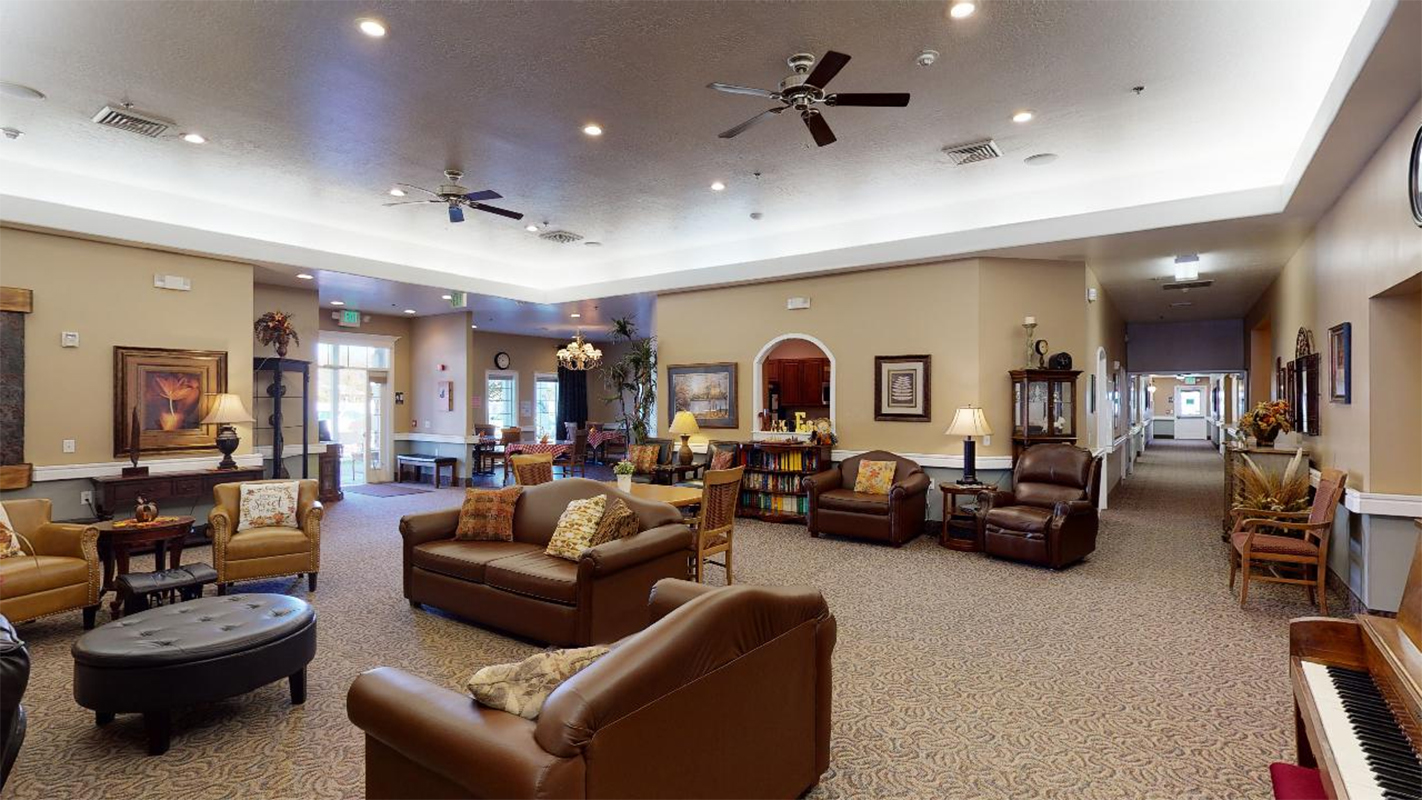
You do not need fancy products. You do require purpose. When activities feel pertinent to a person's life story, engagement rises and behavior concerns typically fall. Ten minutes of focused engagement that the individual enjoys will do more for mood and function than an hour of generic "busywork."
Start with the person, not the diagnosis
Labels seldom guide everyday care. The individual's history does. Map three things: previous roles, sensory choices, and current capabilities. A previous nurse may delight in arranging medical products by size and type. A lifelong garden enthusiast may focus better with soil under their nails and a window open for fresh air. Someone who always worked nights might seem sleepy at 9 a.m. And peak in the late afternoon.
One family I dealt with developed a weekly "life story loop" for their father, a retired bus chauffeur. Mornings began with a short "route" in the neighborhood, he called out landmarks and practiced gentle turns with a rollator. Back home, we used a laminated city map and magnets to plan the very same path, then he logged "miles" in a notebook. That routine supported memory, attention, language, and pride, and his agitation around twelve noon dropped within 2 weeks.
The physiology beneath engagement
When a person delights in an activity, stress hormonal agents decrease and dopamine nudges the brain to find out. Balanced motion and music can synchronize neural shooting, which aids with timing and gait. Hand work, such as kneading dough or threading big beads, brings bilateral stimulation that supports coordination and attention. Short, duplicated bursts with clear starts and surfaces mimic how the brain discovers after injury or change.
This is why timing and pacing matter. Brains with dementia tiredness quicker, then rebound. Go for short, structured sessions, frequently 8 to 20 minutes depending on the stage, with a clean success at the end.
Designing an activity that fits today's brain
Anchor every activity with 3 components: predictability, option, and feedback. Predictability comes from a constant setup or script. Option can be as little as "red or blue?" Feedback means the person can see or feel they did something right. That may be a puzzle piece snapping into place, a beat matched on a drum, or bread rising in the oven.
Consider lighting, noise, and seating before content. Glare on a glossy table can make cards hard to see. A difficult chair without armrests saps attention since the person works to stabilize. In lots of memory care settings, we lower background music, usage job lighting, and angle chairs 45 degrees to the table to cut visual clutter and cue engagement.
Here is a quick setup list families tell me keeps them on track.
- One task per surface, with tools already laid out and prepared to use
- Lighting bright sufficient to read a newspaper without squinting
- Seating that supports hips and feet flat, with armrests for stability
- A basic visual model of the completed job, placed in the upper left for right-handed individuals, upper right for left-handed
- A clear cue for "all done," such as a tray or box where ended up products go
Activities that train attention without feeling like drills
Attention is the doorway to every other cognitive skill. Many so-called memory issues are really attention issues. The technique is to keep the individual oriented to an easy objective while minimizing extraneous demands.
Domino runs, pegboards, and arranging jobs work well when you match difficulty to capability. I often start with arranging jobs anchored in real life: combining socks from a blended laundry basket, organizing hardware by size, or organizing welcoming cards by season. Present a visual rule, such as "all winter cards on the snowflake mat," and you now have a sustained attention task with a clear frame.
For dynamic attention, attempt a sluggish rhythm video game. Use a hand drum or your knees. Tap a simple pattern, time out, and invite the person to copy. If they struggle, shorten the pattern and keep a constant tempo. Over a week, add one beat at a time. Beyond attention, rhythm trains timing and can rollover to steadier walking.
Language grows in familiar soil
People with dementia might lose nouns early while retaining psychological tone, cadence, and tune lyrics. Activities that let language hitchhike on rhythm, images, and action tend to succeed.
Picture-based storytelling with family photos bridges gaps. Set out three photos from the very same era, ask the individual to pick one, and invite short details. Open concerns like "What is occurring here?" can be too broad. Try "Whose apron is that?" or "Was this before or after the move?" If words stall, change to either-or prompts and reflect back what you hear, even if it is partial or confused. The point is not accurate precision, it is language flow and connection.
Singing is language rehab disguised as joy. Brief call and action songs or choruses, embeded in a constant secret and pace, are best. Hymns, folk tunes, and popular hits from early their adult years generally land. In a memory care home, I keep a laminated songbook with 20 well liked choruses in large print. We hint words with an image rather than a lyric sheet when reading is hard, for instance a "You Are My Sunlight" sun drawing.
Gentle difficulties for memory
Strict memorization often annoys. Rather, work with acknowledgment and procedural memory, which hold up longer. Menu preparation with picture cards taps recognition, sequence, and option. Set out 5 meal images, ask the individual to choose 3 for the week, then put them on a calendar. Revisit the very same set two days later and see what they remember with hints. Framed by doing this, "memory work" supports real life and feels collaborative.
Spaced retrieval, a method where you practice a single reality over increasing intervals, can be effective. It helps with security and routines instead of trivia. For example, "When you require the bathroom, what do you do?" Answer: "Press the blue call button." Practice after 30 seconds, then 1 minute, 2 minutes, 4 minutes, up to what the person can manage that day. Keep tone light and commemorate every success. I limit spaced retrieval to 10 minutes, 2 or three times weekly, and track intervals on a simple card.
Executive function through doing, not lectures
Planning, sequencing, and problem solving program up in kitchen areas, workshops, and gardens. Cake mix with photos of each step lets an individual strategy and carry out with hints. We set out bowls delegated right, location image cards above, and physically remove each card as we finish it. Sequencing a 3 step plant care regular works similarly. Water, clean leaves, turn the pot toward the light. Highlight what matters: "The leaves look glossy, that suggests you ended up a step."
Puzzles can be executive function training, but pick ones that mirror genuine objects. Wood inset puzzles or 12 to 24 piece jigsaws with strong contrast work much better than abstract designs. If aggravation rises, try frame puzzles where the summary guides placement. Location just the required pieces on the table to decrease choice load.
Visuospatial skills and hand-eye coordination
Large print word searches and color by contrast sheets can be practical when created for grownups, not kids. I prefer hands on jobs: moving beans in between containers with a scoop, stacking blocks by size, or matching lids to containers by fit. For individuals with Lewy body dementia, depth perception might be undependable. Use high contrast surfaces, for example a dark placemat under a light puzzle.
Balloon volleyball can be a pleasure, but guard safety. Usage chairs with arms, clear the area, and play to a count rather than "points." Counting aloud supplies rhythm and offers a secondary focus that can enhance coordination.
The power of sensory work
Senses lead, cognition follows. Heat, fragrance, and texture pull individuals into the moment without requiring recall. Baking is senior care a near best multi-sensory activity. Pre measure ingredients so the person can put, stir, and knead safely. The fragrance that fills the home rewards attention and provides a natural "all done" hint. For those who do not cook, a simple bread dough to knead and shape into rolls works well, even if you bake it later.
If smells from the past are strong anchors, build a "memory box" with items tied to a life theme: a tiny bottle of motor oil for the mechanic, a sample of lilac for the garden enthusiast, a scrap of canvas for the sailor. Turn products gradually, one at a time, and pair each with a tactile action, such as rubbing oil into a small piece of leather.
Movement as a cognitive tool
Movement enhances blood flow to the brain and can organize attention. The trick is grading intensity. Seated Tai Chi or sluggish boxing patterns with a therapist can enhance balance and attention in just 8 weeks based on little program audits in memory care neighborhoods. For home, try a 10 minute circuit: sit to stand from a durable chair, heel raises holding a counter top, gentle marching in place, then a walk to the mail box and back. While moving, layer a cognitive task, such as naming animals for each letter of the alphabet, however stop the calling if gait looks unsafe. Double tasking ought to challenge, not destabilize.
Outside, nature does half the work. A 15 minute garden walk with purposeful stops, for instance "find 5 yellow flowers," focuses attention and language. In assisted living, I typically set a loop that goes by a bird feeder, a wind chime, and a raised bed. Each stop welcomes a brief action or comment to keep engagement fresh.
Social connection is not extra, it is the engine
People consider cognition as an individual characteristic, yet it grows in company. A 2 person activity where functions are uneven, assistant and coach, lowers pressure. One person stirs batter, the other checks out the picture card actions. A single person places photo magnets on a board, the other names the location. In a memory care home, combining citizens with complementary strengths raises both. A former instructor who speaks plainly however fumbles with her hands can lead a reading circle utilizing brief poems, while a peaceful gentleman who sees patterns quickly can set up the next set of cards.
Families frequently ask about group size. For moderate dementia, I go for two to 4 people. Larger groups can work for music and movement, but attention to job and security drop as numbers rise.
Adapting to stage without losing dignity
Early phase: highlight unique however significant difficulties. Travel planning with a simplified map, budgeting a fictional picnic with mock rates, or learning a new card video game with visual help. Keep errors safe and natural.
Middle phase: shorten steps, boost cues, and lean into rhythm and sensory components. Repeat preferred activities weekly with small variations, such as altering the cake flavor or the garden plant.
Late phase: focus on comfort, sensory pleasure, and micro-successes. Hand under hand assistance lets a person feel the movement without requiring it. Match breath to actions, like breathing in on the arm lift, exhaling on the press, to soothe. 10 seconds of shared humming can be an "activity" when energy is low.
In every stage, keep adult visual appeals. Prevent childish images, even on adaptive products. Replace animation animals with nature photos or bold patterns.
Safety and danger, managed with intention
Risk can not be absolutely no, nor ought to it be. People deserve to meaningful threat, whether that is pruning a rosebush or whisking eggs at the stove. Families can manage risk by changing tools and environment. Use plastic knives that still cut soft foods, induction cooktops that minimize burn danger, and non slip mats under any work surface area. In a supervised memory care setting, ask staff how they balance engagement and safety, and work together on risk plans for activities your loved one values.
A few warnings indicate you must pause or switch gears.
- Sudden change in attention or coordination that looks different from baseline
- Grimacing, guarded movement, or breath holding that suggests pain
- Escalating aggravation with clenched jaw or repeating "I can't"
- Glazed appearance, head dozing, or duplicated yawning that signals fatigue
- Fixating on a mistake, such as remodeling an action over and over, without progress
When you see one, stop, confirm the sensation, and alter the context. Offer water, a stretch, or a sensory reset like a warm washcloth on the hands. Return later with a smaller sized piece of the same task.
Working with a memory care home or assisted living community
If your loved one lives in a memory care home, ask for the activity calendar, however look much deeper. The best neighborhoods use calendars as scaffolds, then embellish throughout the day. Ask how staff adapt activities by interest and phase, and how they record what engages your family member. Bring three to 5 specific concepts from their life story. A dish card in their handwriting, a small tool from their trade, or a playlist of favorite tunes can alter how they participate.
Consistency throughout staff matters. Share short scripts that work. For example, "Mr. Lee likes to start with two practice taps before the rhythm video game," or "Deal Mary the blue apron, she will refuse the red one." Great groups appreciate information like these, and they travel throughout shifts.
In assisted coping with a blended population, quieter, smaller group activities during peak noise hours can avoid overwhelm. Ask for a weekly slot in a smaller room for tailored work, even if the main calendar shows a large group event.
Measuring impact without making it a test
You do not need official scores to know if something helps. Watch for a handful of markers over 2 to 4 weeks: how rapidly the person engages, how typically they smile or speak throughout the task, whether agitation later in the day decreases, and if sleep looks steadier. In several neighborhoods where I have actually sought advice from, including 2 15 minute customized sessions each weekday cut afternoon agitation episodes by approximately a third over six weeks. That kind of modification appears in households' stories long before it hits a spreadsheet.
Keep a simple log in a notebook or phone. Date, activity, what worked, what did not, any state of mind modifications that day. This makes it much easier to refine and to advocate for what your loved one requires in a memory care setting.
A week that stabilizes brain and heart
Here is how a family might shape a week for a woman in moderate dementia who liked baking, gardening, and church music. Monday morning, sort flour and measure sugar for tomorrow's muffins, with a hymn playlist on low in the background. Short walk to inspect the tomatoes, naming what is ripe by color rather than waiting on perfect labels. Tuesday, finish the muffins, set the table with a preferred fabric, invite a next-door neighbor for coffee and 2 songs. Wednesday, a picture chat using 3 garden images and a watering routine for houseplants. Thursday, balloon volley ball for 10 minutes, then peaceful time with a lavender hand massage. Friday, a rhythm video game with a hand drum, including a beat if she smiles, then a drive to a local nursery to smell herbs.
The typical thread is pacing and purpose. Each day holds one or two focused efforts, then rest. Familiar anchors bookend the unique parts.
When absolutely nothing seems to work
There are days when engagement is flat. Before altering activities, scan for reversible issues. Dehydration blunts attention. A urinary tract infection can hinder cognition without a fever. Badly fitting hearing aids or glasses matter more than any video game. Medication changes, specifically new anticholinergics or sedatives, can sap initiative. If an as soon as enjoyed activity loses all pull for a week or two, loop in the medical care clinician.
Sometimes the response is not more stimulation, however less. Individuals with dementia can drown in noise and visual clutter. I have actually cleared a table, used a warm cup to hold, and merely sat. 5 minutes later on, the person began to hum. We developed from that.
Final ideas for families
Effective dementia care lives in the ordinary. Fold towels, name the birds, tap a beat, smell cinnamon. Construct routines that offer self-confidence, and leave space for surprise. You will learn to identify that somewhat brighter appearance in their eyes when an activity hits the right note. Save those moments and duplicate them, carefully and often.
If you work with a memory care home or assisted living group, bring your know-how as family, because you are the keeper of the life story. When experts and families pool understanding and focus on the person in front of them, cognition discovers places to breathe, and life feels more like living than managing.
BeeHive Homes of Draper provides assisted living care
BeeHive Homes of Draper provides memory care services
BeeHive Homes of Draper provides respite care services
BeeHive Homes of Draper supports assistance with bathing and grooming
BeeHive Homes of Draper offers private bedrooms with private bathrooms
BeeHive Homes of Draper provides medication monitoring and documentation
BeeHive Homes of Draper serves dietitian-approved meals
BeeHive Homes of Draper provides housekeeping services
BeeHive Homes of Draper provides laundry services
BeeHive Homes of Draper offers community dining and social engagement activities
BeeHive Homes of Draper features life enrichment activities
BeeHive Homes of Draper supports personal care assistance during meals and daily routines
BeeHive Homes of Draper promotes frequent physical and mental exercise opportunities
BeeHive Homes of Draper provides a home-like residential environment
BeeHive Homes of Draper creates customized care plans as residents’ needs change
BeeHive Homes of Draper assesses individual resident care needs
BeeHive Homes of Draper accepts private pay and long-term care insurance
BeeHive Homes of Draper assists qualified veterans with Aid and Attendance benefits
BeeHive Homes of Draper encourages meaningful resident-to-staff relationships
BeeHive Homes of Draper delivers compassionate, attentive senior care focused on dignity and comfort
BeeHive Homes of Draper has a phone number of (801) 495-3100
BeeHive Homes of Draper has an address of 711 Pioneer Rd, Draper, UT 84020
BeeHive Homes of Draper has a website https://beehivehomes.com/locations/draper/
BeeHive Homes of Draper has Google Maps listing https://maps.app.goo.gl/LgtrXf95hQFVgKrY8
BeeHive Homes of Draper has Facebook page https://www.facebook.com/BeeHiveDraper/
BeeHive Homes of Draper won Top Assisted Living Homes 2025
BeeHive Homes of Draper earned Best Customer Service Award 2024
BeeHive Homes of Draper placed 1st for Utah Senior Living Communities 2025
People Also Ask about BeeHive Homes of Draper
What is BeeHive Homes of Draper Living monthly room rate?
Our monthly rates for both Assisted Living and Memory Care at BeeHive Homes of Draper are thoughtfully designed to be all-inclusive. While pricing reflects each resident’s unique care needs, families appreciate that once a rate is established, it remains stable - no hidden fees or surprise increases as care evolves. We believe in clarity, consistency, and peace of mind
Can residents stay in BeeHive Homes of Draper until the end of their life?
In many cases, yes. We are honored to support residents throughout their journey, including end-of-life care, right here in the comfort of our Draper home. There are rare occasions when medical needs exceed our licensing (such as 24-hour skilled nursing) but we’ll always guide families through any transition with care and compassion
Do we have a nurse on staff?
Yes, we do. Our Registered Nurse, Jacque Parker, R.N., works closely with local home health nurses and house-call physicians to coordinate excellent care. This collaboration allows us to meet a wide range of health needs right here at home
What are BeeHive Homes of Draper's visiting hours?
We know how important it is to stay close to loved ones. That’s why visiting hours at our Draper home are flexible and designed around what works best for the resident. You’re welcome to visit during the day... just try not to come to early and stay too late
Do You Offer Rooms for Couples?
Yes, we do! BeeHive Homes of Draper offers select suites for couples who wish to continue living together while receiving care. These shared accommodations preserve comfort and connection while ensuring both individuals get the personalized support they need. Availability is limited, so reach out to learn more
Do You Provide Senior Day Care or Respite Services?
Absolutely. Our senior day care and short-term respite care options are perfect for families who need extra help during the day or while traveling. Guests enjoy the same high-quality care, engaging activities, and home-cooked meals as our full-time residents, all in a safe, social environment. We’ll help you find a care plan that fits your schedule and your loved one’s needs.
What’s the Difference Between Assisted Living and Memory Care?
Assisted living is best for seniors who benefit from help with daily activities but still enjoy socializing and independence. Memory care is a more structured service tailored to individuals with Alzheimer’s or other cognitive conditions, with routines, guidance, and security that support safety and emotional well-being.
Where is BeeHive Homes of Draper located?
BeeHive Homes of Draper is conveniently located at 711 Pioneer Rd, Draper, UT 84020. You can easily find directions on Google Maps or call at (801) 495-3100 Monday through Sunday Open 24 hours
How can I contact BeeHive Homes of Draper?
You can contact BeeHive Homes of Draper by phone at: (801) 495-3100, visit their website at https://beehivehomes.com/locations/draper/ or connect on social media via Facebook
The Museum of Natural Curiosity at Thanksgiving Point is a popular family destination near Assisted living, memory care, senior care, elderly care, and respite care communities.
❧